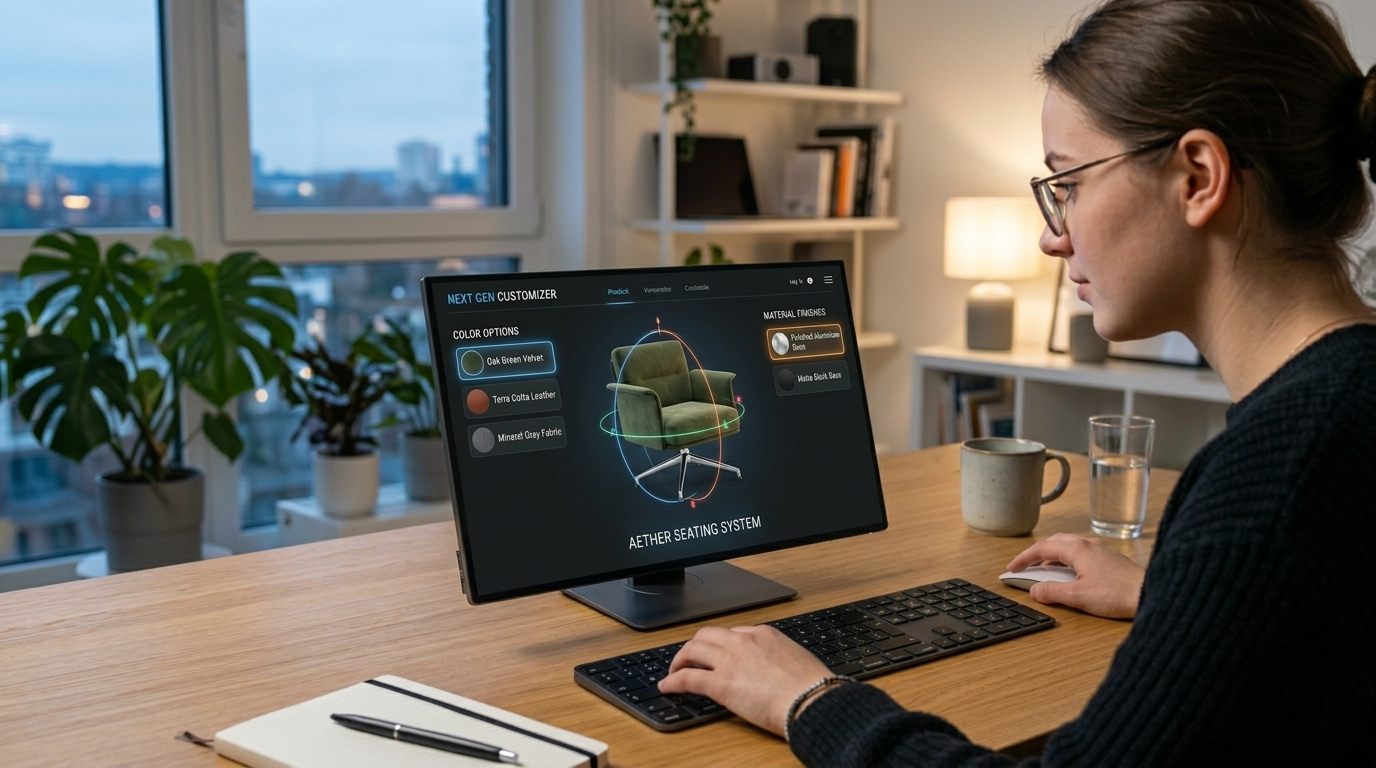
A 3D configurator transforms online shopping into an interactive experience. Customers can customize products in real-time with stunning visual feedback. This technology bridges the gap between physical and digital retail.
Modern consumers expect personalization at every touchpoint. 3D product configurators deliver exactly that. They boost engagement, reduce returns, and increase conversion rates significantly.
What Is a 3D Configurator?
A 3D configurator is an interactive visualization tool. It allows customers to customize products through an intuitive interface. Users can change colors, materials, features, and components instantly.
The technology uses real-time 3D rendering engines. Every customization appears immediately on screen. Customers see exactly what they’re purchasing before checkout.
These configurators work across devices seamlessly. Mobile, tablet, and desktop users enjoy the same experience. No special software or plugins are required.
Key Benefits for E-commerce Businesses
3D configurators dramatically improve customer engagement metrics. Average session time increases by up to 40%. Product page interaction rates double compared to static images.
Conversion rates see substantial improvements, too. Customers feel confident about their purchase decisions. This confidence translates directly into higher sales numbers.
Return rates drop significantly with 3D visualization. Customers know exactly what to expect upon delivery. Fewer surprises mean fewer returns and happier customers.
Industries Using 3D Configurators
Furniture retailers lead the adoption of 3D configurators. Customers customize sofas, chairs, and tables with various fabrics. Room visualization features show products in realistic settings.
Automotive manufacturers have embraced this technology extensively. Car buyers configure vehicles with different colors and features. Virtual showrooms reduce the need for physical inventory.
Fashion and jewelry brands also benefit greatly. Customers design custom shoes, watches, and accessories. Personalization drives premium pricing and brand loyalty.
Essential Features of Quality Configurators
Real-time rendering is absolutely crucial for success. Changes must appear instantly without lag or loading. Smooth performance keeps customers engaged throughout the process.
High-quality textures and materials matter immensely. Realistic fabric, leather, and metal representations build trust. Photo-realistic rendering helps customers make informed decisions.
Mobile optimization cannot be overlooked today. Most shoppers browse on smartphones and tablets. Responsive design ensures seamless experiences across all devices.
Implementation Technologies and Platforms
WebGL powers most modern 3D configurators efficiently. It runs directly in browsers without additional plugins. Three.js and Babylon.js are popular development frameworks.
Cloud-based solutions offer quick deployment options. SaaS platforms handle complex 3D rendering infrastructure. Businesses can launch configurators without technical expertise.
Custom development provides maximum flexibility and control. Tailored solutions integrate perfectly with existing systems. This approach suits businesses with unique requirements.
User Experience Best Practices
Intuitive navigation keeps the customization process simple. Clear labels and organized options prevent overwhelming users. Progressive disclosure reveals advanced features when needed.
Visual feedback confirms every customer action immediately. Highlight selected options with clear visual cues. Undo and reset functions give users confidence.
Multiple viewing angles enhance product understanding significantly. 360-degree rotation lets customers inspect every detail. Zoom functionality reveals material textures and quality.
Integration with E-commerce Platforms
WordPress WooCommerce integration is straightforward and popular. Plugins connect configurators with existing product catalogs. Customization data flows seamlessly into order systems.
Shopify apps provide ready-made configurator solutions. Installation typically requires minimal technical knowledge. API connections handle pricing and inventory management.
Custom platforms may require specialized integration work. REST APIs enable communication between systems. Proper integration ensures accurate pricing and order processing.
Pricing Models and Investment Considerations
SaaS subscription models start around $100 monthly. Entry-level plans suit small businesses with limited products. Enterprise solutions can exceed $1,000 per month.
One-time custom development costs vary widely. Simple configurators begin at $5,000 to $15,000. Complex automotive or furniture systems may cost $50,000+.
Calculate ROI by measuring conversion rate improvements. Most businesses see positive returns within six months. Increased average order values accelerate payback periods.
Performance Optimization Strategies
Model optimization reduces file sizes without sacrificing quality. Polygon count reduction improves loading and rendering speed. Compressed textures maintain visual fidelity efficiently.
Lazy loading improves initial page load times. Load 3D assets progressively as users interact. This approach prevents overwhelming slower connections.
CDN deployment ensures fast global access. Distribute 3D assets across multiple geographic locations. Users connect to the nearest server automatically.
Mobile Optimization Requirements
Touch-friendly controls replace mouse-based interactions seamlessly. Pinch-to-zoom and swipe gestures feel natural. Button sizes accommodate finger taps accurately.
Reduced polygon counts prevent mobile device slowdowns. Optimize 3D models specifically for smartphone GPUs. Adaptive quality maintains smooth framerates consistently.
Responsive layouts adapt to various screen sizes. Vertical orientations require different interface arrangements. Test thoroughly across popular mobile devices.
SEO Considerations for 3D Configurators
Search engines struggle to index 3D content directly. Provide descriptive alt text for visual elements. Supplementary written descriptions improve discoverability significantly.
Page load speed affects search rankings substantially. Optimize 3D assets to meet Core Web Vitals. Fast-loading configurators rank better in search results.
Structured data markup helps search engines understand products. Schema.org product markup includes customization options. Rich snippets increase click-through rates from searches.
Analytics and Customer Insights
Track which customization options customers prefer most. Popular colors and features inform inventory decisions. Data reveals emerging trends before competitors notice.
Monitor abandonment points within the configuration process. Identify confusing steps that frustrate users. Simplify problematic areas to improve completion rates.
Time-to-purchase metrics show configuration effectiveness. Shorter times indicate intuitive user experiences. Longer sessions may reveal complex decision-making processes.
Common Implementation Challenges
Creating accurate 3D models requires specialized skills. Outsource modeling to experienced 3D artists. Quality models justify the additional investment cost.
Browser compatibility issues sometimes arise unexpectedly. Test configurators across Chrome, Safari, and Firefox. Fallback options accommodate older browsers gracefully.
Pricing calculations must remain accurate despite complexity. Dynamic pricing engines update costs in real-time. Test extensively to prevent customer checkout confusion.
Future Trends in Product Configurators
Augmented reality integration is rapidly gaining momentum. Customers place virtual products in actual spaces. This technology reduces purchase hesitation dramatically.
AI-powered recommendations personalize the configuration experience. Machine learning suggests options based on preferences. Smart defaults accelerate the customization process.
Virtual reality showrooms create immersive shopping experiences. Customers explore products in fully digital environments. VR headset adoption will expand these opportunities.
Conclusion
3D configurators revolutionize online product customization fundamentally. They bridge the experience gap between digital browsing and physical shopping. Businesses that implement them gain competitive advantages.
Success requires careful planning and quality execution. Choose the right technology for your needs. Prioritize user experience above all other considerations.
Start with a pilot program on selected products. Measure results and gather customer feedback continuously. Scale your configurator strategy based on proven ROI.