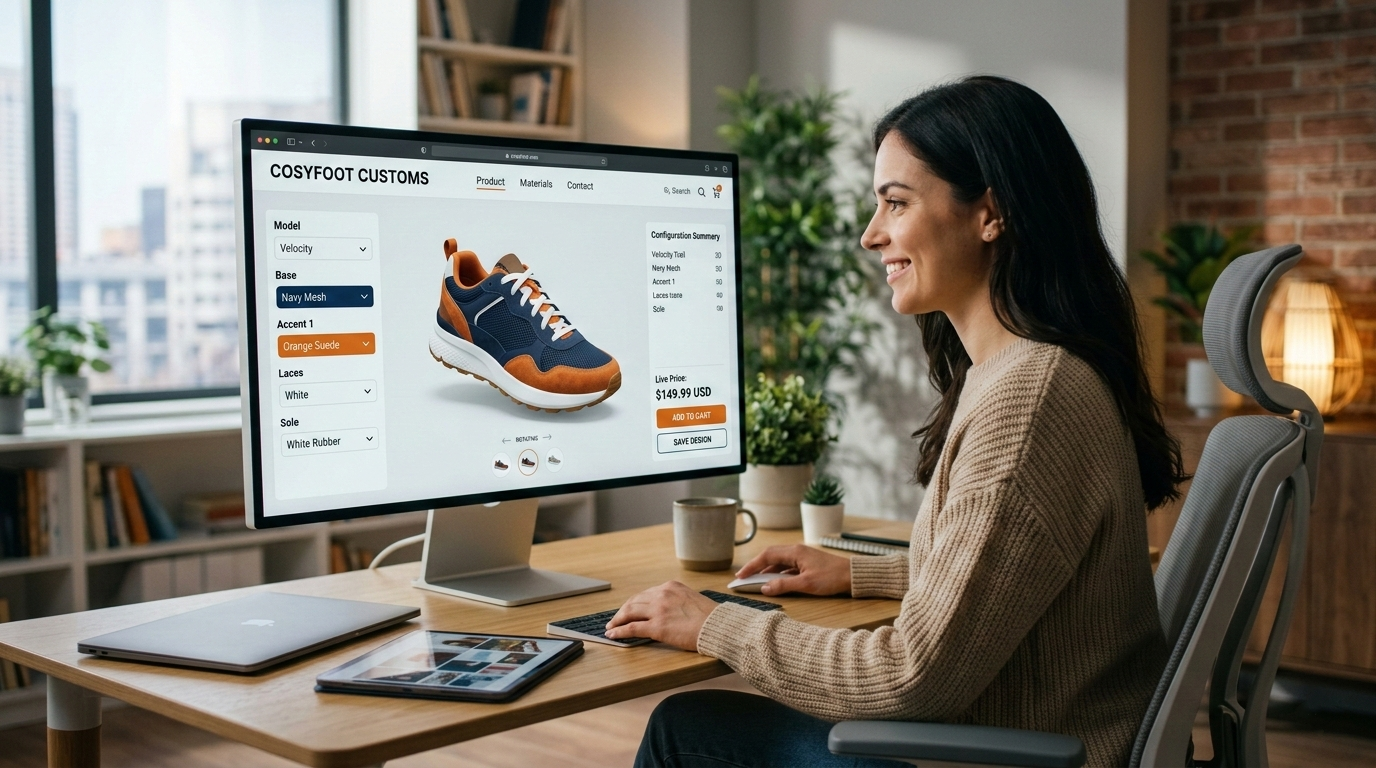
The digital marketplace has fundamentally transformed consumer expectations around personalization. No longer satisfied with one-size-fits-all products, today’s shoppers demand the ability to customize purchases to match their unique preferences, needs, and styles. At the forefront of this transformation stands the product configurator, a sophisticated technology that’s revolutionizing how businesses deliver customization while dramatically improving the customer experience.
The Customization Challenge
Online product customization historically presented significant challenges for both businesses and customers. Traditional approaches relied on complex order forms, email exchanges with customer service representatives, or phone consultations to capture customization requirements. These methods were time-consuming, error-prone, and often resulted in miscommunication between what customers envisioned and what manufacturers delivered.
The configurator solves these challenges by providing interactive, visual interfaces where customers directly specify their preferences and immediately see the results. This direct manipulation approach eliminates miscommunication, reduces ordering errors, and creates confidence that the final product will match expectations.
Visual Clarity: Seeing What You’re Getting
One of the most significant improvements configurators bring to online customization is visual clarity. Instead of imagining how a product might look with selected options, customers see accurate representations in real-time.
When customizing furniture, for example, a 3D product configurator displays the exact sofa design with chosen upholstery fabric, showing texture detail, color accuracy, and how different materials interact with lighting. This visual certainty eliminates the guesswork that plagued earlier customization attempts.
The impact is measurable. Businesses implementing visual configurators report return rates dropping by 20-35% compared to traditional customization methods. When customers clearly see what they’re ordering, fewer products arrive that don’t meet expectations.
Real-Time Feedback: Instant Gratification
Modern configurators provide immediate feedback for every customer decision. Select a different color? The product updates instantly. Choose a larger size? Dimensions adjust in real-time. Add a premium feature? The price updates immediately to reflect the change.
This instant feedback creates engaging, almost game-like experiences that keep customers involved in the customization process. Research shows that customers using interactive configurators spend 40-60% more time engaging with products compared to traditional product pages,s and this increased engagement directly correlates with higher conversion rates.
Guided Customization: Preventing Errors
One of the configurator’s most valuable improvements over traditional customization is built-in intelligence that prevents configuration errors. These systems understand product constraints and automatically guide customers toward valid combinations.
If a particular fabric choice isn’t compatible with a specific furniture frame style, the configurator either prevents that selection or alerts the customer to the incompatibility. If a laptop configuration requires a minimum RAM amount for a selected processor, the system automatically adjusts options accordingly.
This guidance eliminatethe s frustration customers experienced with earlier customization methods, where they might complete an entire order only to receive a call days later informing them their chosen combination wasn’t manufacturable.
Simplified Complexity: Managing Options
Products with extensive customization possibilities can overwhelm customers if not presented thoughtfully. Configurators excel at organizing complexity into digestible, sequential decisions.
Rather than confronting customers with 50 simultaneous choices, well-designed configurators present options in logical sequences. First, choose the base product type. Then select primary features. Next, specify colors and finishes. Finally, add accessories and personalization.
This progressive disclosure approach, a user experience principle, ensures customers never feel overwhelmed while maintaining access to comprehensive customization capabilities. Each decision builds naturally on the previous one, creating intuitive flows that even first-time users navigate successfully.
Mobile Optimization: Customization Anywhere
The shift to mobile commerce demanded that configurators work flawlessly on smartphones and tablets. Modern product configurators are optimized for touch interfaces, smaller screens, and variable network conditions.
Mobile configurators employ several strategies to maintain excellent experiences despite device constraints:
Touch-optimized controls: Swipe gestures rotate 3D models, pinch-to-zoom examines details, and tap selections feel natural on touchscreens.
Vertical layouts: Mobile configurators stack options vertically, working with rather than against the natural scroll direction of mobile devices.
Progressive loading: Essential elements load immediately while high-resolution assets download in the background, preventing frustrating wait times.
Simplified interfaces: Mobile versions often streamline option presentations, focusing onthe most popular choices while keeping advanced options accessible through additional taps.
These mobile optimizations ensure customization experiences remain engaging and effective, regardless of device choice critical given that mobile devices now account for over 70% of e-commerce traffic.
3D Visualization: The Game Changer
While basic configurators improve customization through better organization and validation, 3D product configurators represent a quantum leap in capability and customer experience.
Three-dimensional visualization allows customers to examine configured products from every angle, revealing details impossible to convey through static images or text descriptions. This comprehensive view creates confidence and reduces the anxiety often associated with customizing expensive products.
Photorealistic Rendering
Advanced 3D configurators employ rendering techniques that create photorealistic images indistinguishable from professional product photography. These systems accurately simulate:
- How different materials reflect and absorb light
- Texture details from smooth metals to rough fabrics
- Shadows and highlights that provide depth perception
- Color accuracy across various materials and finishes
This realism is particularly crucial for products where appearance significantly influences purchase decisions, such as furniture, fashion, home décor, and luxury goods.
Interactive Exploration
3D product configurators enable interactive exploration that static images can’t match. Customers rotate products to view from any angle, zoom in to examine construction details, and even trigger animations showing how products function, opening cabinet doors, extending table leaves, or demonstrating mechanical operations.
This interactivity creates engagement levels that significantly impact conversion rates. Data shows customers who interact with 3D configurators convert at rates 25-40% higher than those viewing traditional product pages.
Augmented Reality Integration
The latest evolution in configurator technology integrates augmented reality, allowing customers to visualize configured products in their actual environments. Using smartphone cameras, customers place virtual representations of customized furniture in their living rooms, preview how custom artwork looks on their walls, or see how personalized accessories complement their existing possessions.
This AR capability addresses one of online shopping’s persistent challenges:s understanding how products fit within personal spaces and existing belongings. The impact is substantial, with AR-enabled configurators showing conversion rate improvements of 30-50% over non-AR alternatives.
Personalization Options: Beyond Basic Customization
Modern configurators enable personalization options that were impractical with traditional customization methods:
Text engraving: Customers add personalized messages, names, or dates with real-time previews showing exactly how text appears on finished products.
Image uploads: Some configurators allow uploading personal photos or artwork that’s incorporated into product designs, with intelligent systems that verify image quality and adjust compositions for optimal results.
Style recommendations: AI-powered features analyze customer preferences and suggest configurations aligned with their tastes, helping those who want customization but feel overwhelmed by choices.
Historical preferences: Configurators that remember past selections streamline reordering or configuring similar products, particularly valuable for businesses making repeat purchases.
Price Transparency: Building Trust
One criticism of traditional customization was pricing opacity. Customers often didn’t know final costs until receiving quotes days after submitting customization requests. This uncertainty created anxiety and abandoned purchases.
Configurators solve this with real-time pricing that updates instantly as customers make selections. This transparency builds trust and helps customers make informed decisions about trade-offs between features and budget.
Advanced pricing engines can even highlight value options, ns suggesting alternative configurations that deliver similar outcomes at lower costs or premium upgrades that provide significant additional value.
Speed and Efficiency: Time Savings
Traditional customization processes were notoriously time-consuming. Customers invested hours across multiple sessions working with sales representatives to finalize specifications. This inefficiency discouraged customization despite the customer’s desire for personalized products.
Configurators compress what once took days or weeks into minutes. Customers complete entire customization processes in single sessions, often in less time than browsing through standard inventory to find acceptable compromises.
This efficiency benefits businesses too. Automated configurators eliminate manual order processing, reduce errors requiring correction, and enable smaller teams to handle larger order volumes.
Data Collection and Insights
Every interaction with a configurator generates valuable data. Businesses learn which features customers value most, where customization processes cause confusion or abandonment, which combinations prove most popular, and how price sensitivity affects feature selections.
This behavioral data informs product development, helps optimize configurator interfaces, and provides market intelligence that guides business strategy. Traditional customization methods provided none of these insights; custom orders simply arrived without context about customer decision-making processes.
Integration with Business Systems
Modern configurators don’t operate in isolation. They integrate seamlessly with broader business systems:
Inventory management: Configurators check real-time inventory availability, preventing customers from selecting out-of-stock options.
Manufacturing systems: Customer configurationsare transmittedt directly to production systems, eliminating manual order processing and transcription errors.
CRM platforms: Configuration data enriches customer profiles, enabling personalized marketing and improved customer service.
Shipping and logistics: Systems calculate accurate shipping costs based on configured product dimensions and weights, providing precise delivery estimates.
This integration creates seamless experiences from configuration through delivery while improving operational efficiency.
Collaborative Configuration
Some advanced configurators support collaborative customization where multiple people contribute to configuration decisions. A couple furnishing a home can each propose furniture configurations and discuss options together. A team configuring corporate apparel can collaborate on designs, ensuring everyone’s input is considered.
These collaborative features transform configurators from individual tools into shared experiences that improve decision-making while building consensus around final choices.
Accessibility Improvements
Configurators increasingly incorporate accessibility features, making customization available to everyone:
- Voice control for those with limited dexterity
- High-contrast modes for visually impaired users
- Screen reader compatibility for blind customers
- Simplified modes for those overwhelmed by complexity
- Multi-language support for global audiences
These accessibility improvements expand customer bases while demonstrating a commitment to inclusive experiences.
The Competitive Advantage
Businesses offering sophisticated configurators gain significant competitive advantages. In markets where multiple companies sell similar products, configuration capabilities become key differentiators influencing customer choice.
Customers willingly pay premium prices for products customized through engaging configurators. Studies show configured products command 20-35% price premiums over standard alternatives, directly impacting profit margins.
Brand loyalty also increases, as customers who successfully customize products become repeat buyers at rates 2-3 times higher than those purchasing standard inventory.
Conclusion: The Future is Configured
The product configurator has transformed online customization from a challenging, error-prone process into an engaging experience that benefits both customers and businesses. Through visual clarity, real-time feedback, intelligent guidance, and seamless integration, configurators make customization accessible, enjoyable, and practical at scale.
As 3D product configurators become more sophisticated and incorporate emerging technologies like AI, AR, and voice interfaces, the distinction between custom and standard products will continue to blur. Customization won’t be a premium option. It will be the standard expectation.
For businesses, investing in configurator technology isn’t just about keeping pace with competitors. It’s about unlocking new revenue opportunities, building stronger customer relationships, and operating more efficiently. For customers, configurators deliver the personalized products they desire with the convenience and confidence they demand.
The improvement configurators bring to online product customization isn’t incremental. It’s transformational, reshaping expectations and possibilities in the digital marketplace.