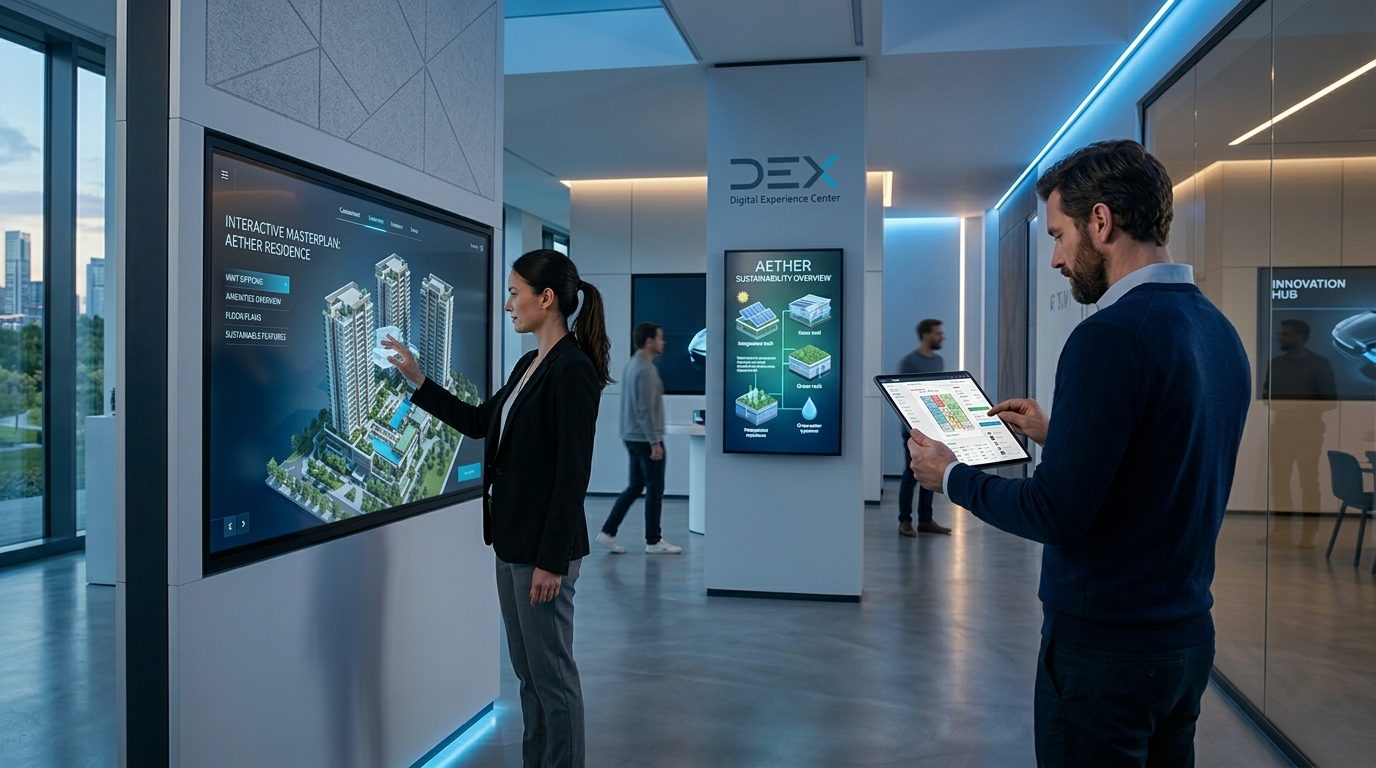
A Digital Experience Center revolutionizes how customers interact with brands. These innovative spaces blend physical and digital technologies seamlessly. They create memorable experiences that drive engagement and sales.
Traditional showrooms are evolving into immersive digital destinations. Customers now expect interactive touchpoints throughout their journey. Digital Experience Centers meet these expectations with cutting-edge technology.
Businesses across industries are investing in these transformation hubs. They recognize that customer experience defines competitive advantage. The future of retail and B2B sales lies in digital engagement.
What Is a Digital Experience Center?
A Digital Experience Center is an interactive physical space. It showcases products and services through digital technologies. Customers engage with brands in completely new ways.
These centers combine touchscreens, virtual reality, and augmented reality. Product demonstrations become interactive and personalized experiences. Visitors control their journey through the space.
The Digital Experience Center serves multiple business functions. It acts as a showroom, training facility, and innovation lab. Sales teams leverage these spaces for impactful presentations.
Core Components of Modern Experience Centers
Interactive displays form the foundation of every center. Large touchscreens allow customers to explore product catalogs. Multi-user interfaces enable collaborative browsing and decision-making.
Virtual reality stations transport visitors into immersive environments. Customers experience products in realistic simulated contexts. This technology proves especially valuable for complex products.
Augmented reality features overlay digital information onto physical products. Visitors see additional specifications, features, and customization options. This blend enhances understanding without overwhelming visitors.
Benefits for Customer Engagement
Digital Experience Centers dramatically increase engagement time with brands. Visitors spend 3-5 times longer than in traditional showrooms. Extended interaction builds stronger emotional connections with products.
Personalization reaches unprecedented levels in these environments. Systems adapt content based on visitor preferences instantly. Each customer receives a unique, tailored experience.
Information retention improves significantly through interactive learning. Customers remember hands-on experiences far better than brochures. This translates directly into higher conversion rates.
Industry Applications and Use Cases
Automotive brands pioneered the Digital Experience Center concept. Customers configure vehicles and experience virtual test drives. These centers complement traditional dealerships effectively.
Technology companies showcase complex software and hardware solutions. Interactive demonstrations clarify features better than traditional presentations. B2B clients appreciate hands-on exploration before purchasing.
Real estate developers use these centers brilliantly. Buyers tour properties that haven’t been built yet. Virtual walkthroughs help customers visualize their future homes.
Technology Infrastructure Requirements
High-speed internet connectivity is essential for operations. Cloud-based content management systems deliver seamless updates. Robust networks prevent frustrating delays during demonstrations.
Professional-grade display hardware ensures stunning visual quality. 4K and 8K screens provide crisp, detailed imagery. Commercial displays withstand constant daily use reliably.
Backend systems integrate with existing business databases. Real-time inventory and pricing information remains accurate. CRM integration captures valuable visitor data automatically.
Design Principles for Effective Centers
Open layouts encourage natural exploration and discovery. Visitors should move freely without feeling constrained. Clear pathways guide them through curated experiences.
Flexible spaces adapt to different event types easily. Modular furniture and movable displays enable quick reconfiguration. Centers host product launches, training sessions, and client meetings.
Ambient technology blends seamlessly into the environment. Visible wires and equipment distract from the experience. Professional installation creates clean, sophisticated spaces.
Content Strategy and Management
Dynamic content keeps the Digital Experience Center fresh. Regular updates prevent repeat visitors from seeing stale information. Content management systems enable quick changes without technical expertise.
Storytelling drives emotional connections with brand messages. Interactive narratives guide visitors through product benefits naturally. Compelling stories resonate far better than feature lists.
Localization ensures relevance across different markets. Content adapts to regional preferences and languages automatically. Global brands maintain consistent messaging while respecting local nuances.
Measuring Success and ROI
Visitor analytics reveal engagement patterns and popular features. Heat mapping shows which displays attract the most attention. These insights inform continuous improvement efforts.
Conversion tracking connects center visits to actual sales. Attribution models demonstrate the center’s impact on revenue. Most companies see 20-40% increases in conversion rates.
Customer feedback systems gather qualitative insights immediately. Post-visit surveys capture impressions while memories are fresh. Net Promoter Scores typically exceed traditional showroom metrics.
Integration with Omnichannel Strategy
Digital Experience Centers complement online and retail channels. Visitors research online, experience in-center, then purchase anywhere. Seamless data sharing creates unified customer journeys.
Staff have access complete customer history during center visits. Previous online interactions inform personalized in-center experiences. This integration eliminates frustrating repetition for customers.
Follow-up marketing leverages center visit data effectively. Automated campaigns reference specific products explored during visits. Personalized outreach drives higher response rates.
Staff Training and Enablement
Employee expertise makes or breaks the center experience. Staff must understand both products and technology deeply. Ongoing training programs maintain high service standards.
Technology familiarity allows staff to troubleshoot minor issues. Quick problem resolution prevents visitor frustration and disappointment. Empowered teams create smoother experiences overall.
Sales techniques evolve for digital-first environments. Staff guide rather than push customers through experiences. Consultative approaches align better with modern buyer expectations.
Virtual and Hybrid Experience Options
Remote access extends the Digital Experience Center globally. Video conferencing brings distant customers into the space. Sales teams conduct virtual tours for international prospects.
Hybrid events combine physical and virtual attendees seamlessly. Technology enables participation regardless of location constraints. This flexibility maximizes center utilization and reach.
On-demand content allows customers to revisit experiences later. Recorded sessions and downloadable materials extend engagement beyond visits. Multi-touch attribution tracks this extended journey effectively.
Cost Considerations and Budget Planning
Initial setup costs for Digital Experience Centers vary significantly. Basic installations start around $100,000 for small spaces. Premium enterprise centers can exceed $2 million investments.
Technology refresh cycles require ongoing budget allocation. Hardware typically needs updates every 3-5 years. Software subscriptions and content creation demand annual spending.
Calculate ROI by measuring incremental revenue generated. Most centers achieve payback within 18-36 months. Reduced travel costs and improved close rates accelerate returns.
Security and Data Privacy
Customer data collection requires robust privacy protections. GDPR and CCPA compliance are non-negotiable requirements. Transparent opt-in processes build trust with visitors.
Network security prevents unauthorized access to systems. Firewalls and monitoring protect against cyber threats. Regular security audits identify and address vulnerabilities.
Physical security safeguards expensive equipment investments. Access controls limit who can modify configurations. Surveillance systems deter theft and vandalism effectively.
Future Trends and Innovations
Artificial intelligence personalizes experiences at unprecedented scales. Machine learning predicts visitor interests from minimal inputs. Recommendations become eerily accurate and helpful.
Haptic technology adds tactile dimensions to digital interactions. Customers feel textures and sensations through specialized interfaces. This enhances realism for product demonstrations significantly.
Holographic displays eliminate the need for physical prototypes. Three-dimensional projections showcase products from every angle. This technology reduces costs while improving presentations.
Creating Your Digital Experience Center
Start with clear objectives aligned to business goals. Define what success looks like before designing spaces. Measurable targets guide design and technology choices.
Partner with experienced design and technology firms. Specialized expertise prevents costly mistakes and delays. Request case studies from similar industry implementations.
Pilot programs minimize risk before full-scale deployment. Test concepts in smaller spaces or temporary installations. Learn from pilot experiences before major investments.
Conclusion
The Digital Experience Center represents the future of engagement. These spaces transform how customers discover and purchase products. Early adopters gain significant competitive advantages in their markets.
Success requires strategic planning and ongoing optimization. Technology alone doesn’t create great experiences without strategy. Focus on customer needs throughout the entire process.
Start planning your Digital Experience Center today. Evaluate your customer journey for digital enhancement opportunities. The investment in experience pays dividends for years ahead.